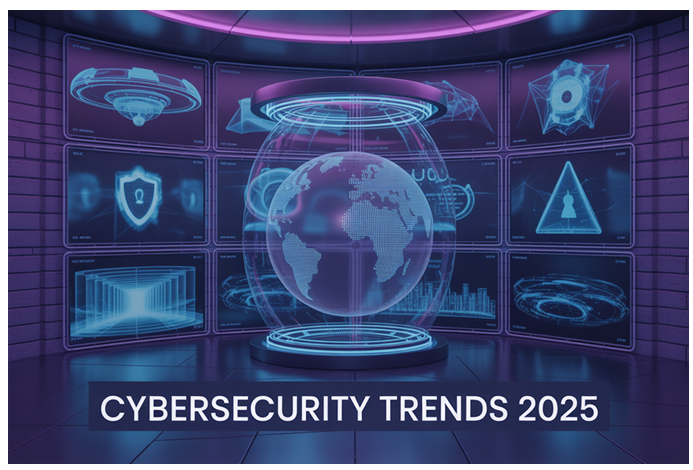
Cybersecurity continues to evolve at high speed, and businesses can no longer rely on outdated defense strategies. In 2025, organizations need stronger visibility, faster response, and a more resilient security foundation.
1. The Evolution of AI-Powered Cyber Threats
AI-powered malware is becoming more adaptive, automated, and harder to detect. Threat actors are using AI to rewrite code, evade traditional defenses, and launch attacks at greater speed. This means businesses need smarter monitoring and faster threat detection capabilities.
2. Deepfake Threats in Corporate Communications
Deepfake audio and video are becoming a serious risk for organizations. Attackers can now impersonate executives or trusted partners to manipulate employees, approve fake transactions, or gain access to sensitive information.
3. AI-Driven Social Engineering
Social engineering attacks are more convincing than ever. AI can now generate highly personalized phishing emails and messages that closely match real communication styles, increasing the chances of human error and compromise.
4. Zero-Trust Architecture
Zero trust is no longer optional. Organizations are moving toward security models that verify every user, device, and request before granting access. This approach is essential for modern environments that include remote teams, cloud apps, and distributed infrastructure.
5. The Quantum Threat
While practical quantum attacks are still emerging, their long-term impact on encryption is a growing concern. Businesses should begin understanding post-quantum readiness and how future cryptographic changes may affect sensitive data and communications.
Conclusion
These trends are reshaping how organizations think about cyber resilience. Staying informed, modernizing security architecture, and preparing early can make a critical difference in the years ahead.
Need help strengthening your cybersecurity posture?
Connect with Uplinkbharat to explore secure, scalable, and business-ready IT and cybersecurity solutions.
Talk to Our Team